Returning to Roots - How Art and Herbalism Work to Heal
As I emphasize so often, art for me has been a pathway to wholeness and peace. It has been the sanctuary I lean on for deep reflection and expression. Getting lost in creative flow and letting the mind wander is how I have been able to process a lot of my grief and trauma. Additionally, sharing my passion and creating spaces for others to find healing in this way has confirmed my spiritual calling; there is nothing more fulfilling to me than enlightening folks on the power of art-making.
Except perhaps working with plants.
There was a time, in ancient days, when healing didn’t come in bottles, and creativity wasn’t confined to studios. Both were found in the same place — the earth itself. I’ve come to see that making art and making plant medicine are not separate callings, but two outlets of the same longing: to restore wholeness and invite harmony into life. When I paint, I listen. When I work with herbs, I listen too. The practice of both is mindful and meditative, and the end goal is beauty, harmony and healing. The pigments that bleed onto my paper mirror the hues that steep in my tincture jars — each is a translation of nature’s voice. Each a small act of tending the spirit.
When I paint, I’m in quiet conversation with the pigment and self. I am in reverence of the medium and of the divine Creator I serve. Pigment moves where it wants, reminding me that beauty often lives in the unexpected. Blending herbs feels much the same. I watch as roots, leaves, and flowers surrender their color and magic, releasing potent medicine for the mind, body and soul. Both creations are transformations — one born of light and pigment, the other of plant and spirit - neither can thrive without patience or trust.
In both painting and herbalism, I am a collaborator. I am not in control. The materials have their own intelligence; they invite me to slow down so that I can observe the patterns of their behavior and meet them halfway. The water will flow as it pleases, just as a tincture will steep on its own time. There’s a rhythm in these processes — a heartbeat that belongs to the earth. My role is to tend to it, to hold the space where color and medicine can come alive.
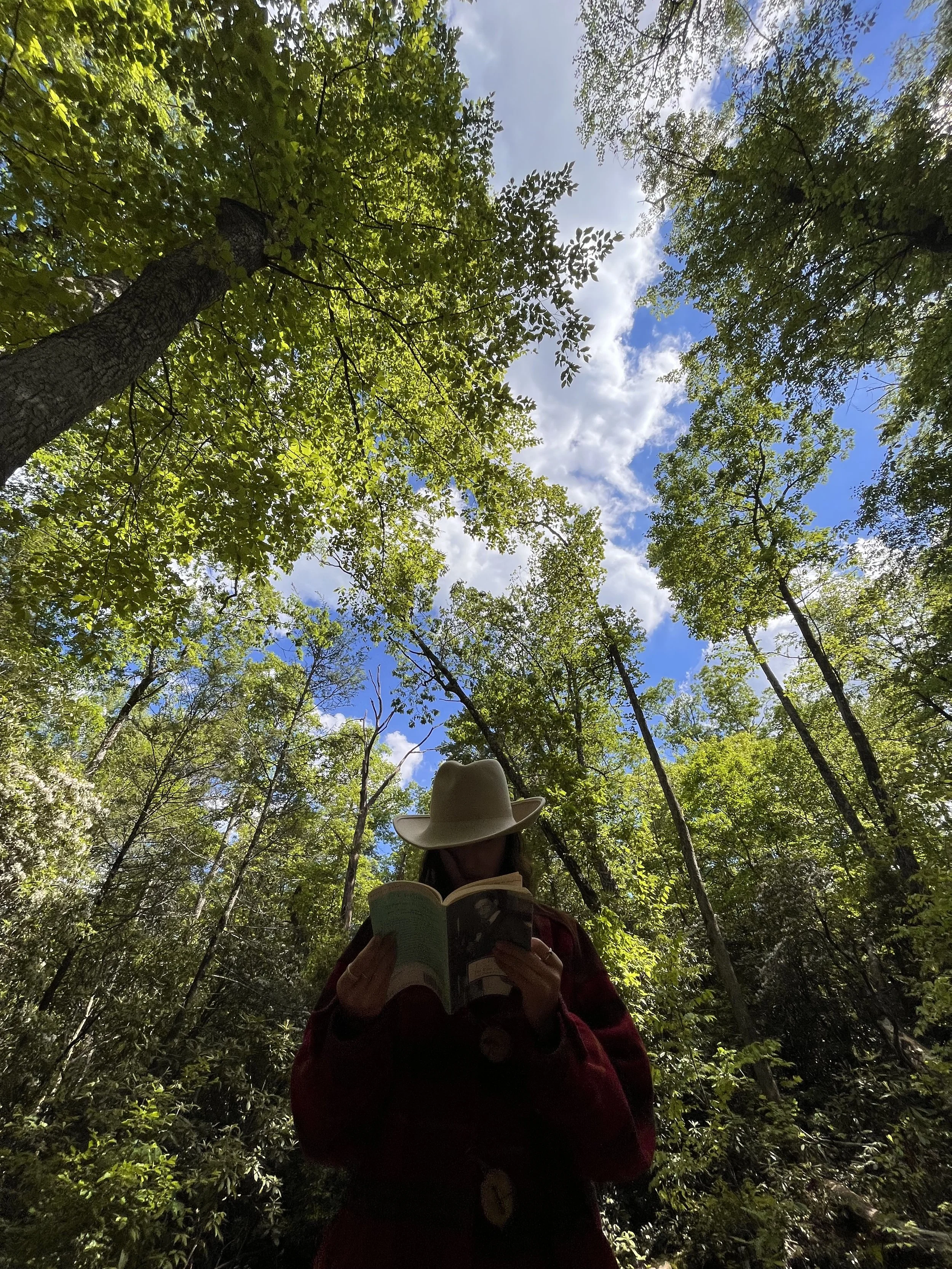
My heart sings with excitement as I get ready to incorporate plant medicine into this small business of mine. When I moved to Tennessee 4 years ago, I dove right into the wisdom of folk medicine of Appalachia. I felt deep gratitude to live in a land so lusciously abundant with wild edible plants. This region of the world is a very sacred place with richness and history, and I have always felt connected and rooted in these mountains because of my heritage. I come from the Wild Potato Clan of the Eastern Band of the Cherokee Nation, so for centuries, my family has trodded this land. Remembering the ways of the people that came before me feels intuitive, and I wish to carry on their traditions of tending to and healing with the Earth as much as I can.
My apothecary at the moment isn’t very large. I only have 4 herbal tinctures to offer, but it’s a start. With being a one-woman team and also maintaining commission work and classes, I have only been able to dabble in this herbal project for now. BUT, my vision for the future is to continue expanding what I made and provide my community with plentiful medicines to keep us healthy and stabilized.
Here is what I have been working on:
GOLDEN ROD
The color of this flowering plant is stunning - its name is very appropriate. Seeing a sunny field of golden rod ignites so much happiness in me. Yellow is truly such an inviting color.
Just before the flowers are fully in bloom is the best time to harvest. I was so grateful to my friend Fig who foraged some for me this season (She is an exceptional herbalist with extensive knowledge about plants - meeting her this year was no coincidence).
After steeping this tincture for about 6 weeks, I opened the jar to be hit with the most fragrant smell, floral and almost a bit citrusy. The color of the strained tincture was also shockingly beautiful. Literally liquid gold. A jar of colorful, fragrant, BEAUTIFUL medicine. It felt shameful to bottle these in amber colored glass because it hid that stunning color, but alas, the medicine must be protected from UV rays…
GOLDEN ROD BENEFITS:
Golden rod is known to be a great remedy for seasonal allergies. It helps to relax the body’s reactive responses and sooth the lungs. It is good for sinus congestion, allergies, colds, and flu due to its anti-inflammatory and decongestant properties.
Golden rod is also a great remedy for issues related to the kidneys and urinary tract. It is a diuretic, meaning it increases the flow of urine and allows the body to release excess toxins. It has even been known to help prevent or flush out kidney stones and heal bladder infections!
Vitamin C and vitamin A are also found in golden rod as well as beta-carotene, and minerals like phosphorus, calcium, and iron. It is powerfully antioxidant rich, strengthening the immune system and treating a variety of ailments.
OREGANO
It’s not just for your spaghetti: its a POTENT herb for healing. Oregano! It smells and tastes delicious in tincture form.
I moved into a new house this spring. The flowerbeds, which get 6+ hours of sun, were completely empty and beckoning me to get to designing a practical garden space. While ornamental plants can be lovely, I thought, “why go to the trouble of planting things that aren’t also functional.” So that’s what I did. In one of the large beds I planted medicinal herbs and perennial flowers: yarrow, coreopsis, oregano, thyme and rosemary. The flowers I was able to do some natural dying with; the red yarrow makes a really cool imprint on natural fabrics, and the yellow from the coreopsis flowers is always so vibrant. The herbs of course I did a lot of cooking and drying with, but also was able to make some these tinctures and oils. Rosemary (along with some stinging nettle I foraged) infused into some high quality cold pressed olive oil along with some castor oil and jojoba made for the best scalp treatment and hair oil (will make a whole separate blog about this!)
But the oregano sort of stole the show in terms of functionality, I believe. It’s power lies deep in its antimicrobial properties.
OREGANO BENEFITS:
Oregano is a powerful antimicrobial (antibacterial, antifungal and antiviral) plant and can quickly fight off infections anywhere in the body. It contains compounds that help fight damaging free radicals that harm cellular production and reduce oxidative stress.
On top of its infection-fighting abilities, oregano also strengthens the immune system and fights inflammation. Unlike the popular oil of oregano, which can be aggressive on the stomach, this water-soluble tincture is suitable for everyday consumption.
STINGING NETTLE:
This plant has drawn me in from the day I moved to southern Appalachia and started exploring the ecology around me. That plant that sends stings up your nervous system when you brush past it along creeks and rivers. That sting, which, yes, can be irritating, brings about blood flow and even stimulates serotonin production.
There is a very special plant stand of stinging nettle that keeps me coming back over in Hot Springs, NC. Well really in Del Rio, TN, but sort of right on the state line. For the last few years, this particular spot has been the place I head to when I have a day off and need some solitude in the woods with no service. There are blackberry thickets, creeks with fresh and cold mountain water and rocks shaped like perfect recliners, pawpaw, waterfalls, and sandy river beds in the sun. Deep in Cherokee National Forest. I noticed a stand of nettle there one day and it began to speak its wisdom to me by piquing my curiosity.
STINGING NETTLE BENEFITS:
When the plant brushes against your skin, the spicules (tiny thorns) inject histamines into your body causing an irritating reaction. But beneath the irritating feeling you will feel for a moment on your skin, these histamines are actually so good for your body and mind. Injecting them into affected areas of arthritis can reduce inflammation by brining about circulation to the area and speed up healing. They can also trigger the production or serotonin, making your mood overall improve. Indigenous people used stinging nettle for urtication, which means they flogged/whipped their own skin with the stalks of the plant for medicinal, ceremonial, and strengthening purposes.
Because stinging nettle is such a good herb for circulation, it helps with a variety of ailments as well (in case you haven’t noticed, most herbs don’t just treat one thing - they are so well rounded and capable to healing on a whole-body level). If you struggle with hair loss and skin problems, stinging nettle can help. If you are menstruating, it can ease heavy and painful flow and increase iron after blood loss. I usually double up on my stinging nettle intake during my menstrual phase.
_____________________________________________________________________________________________________
For now, those are the 3 herbs I am stocking on my website. I really have poured my heart into making the through the whole process. Planting, growing, foraging cutting, jarring, straining, bottling, labeling - each step has been prayerful and intentional.
As always thank you for supporting my crafts. I am so grateful.
Caroline